Wednesday, August 2, 2017

Saturday, November 15, 2014
Seattle Espresso
Now, I'm sure all of you know Starbuck's and how it started in Seattle. In my mind, it's the company that brought coffee fame to the Northwest. It introduced my generation to real coffee. We did away with percolator coffee and found out how fresh, strong, bold coffee tasted and we liked it. It set the stage for really great coffee that you now find here and there in cities across the United States.
What I didn't know at the time was that great coffee culture existed elsewhere. It wasn't until I traveled to Italy that I understood what great espresso was and how integral it was to a culture. A morning cup of espresso or cappuccino, whether slugged back alone or accompanied by a roll or the sweet and delightful bomboloni was and is a ritual for a great portion of the population, if one goes on observation of cafes and train stations. Isn't bombolini a great word? Say it three times and doesn't it just make you smile? When we travel today, we frequently try local coffee shops and judge the coffee by ordering the espresso. What we found was that espressos at Italian train stations were better than 95% of espressos you can get in the USA, but we keep trying.
I had to let you know today that Seattle, the ubiquitous home of Starbuck's, has a coffee shop that will transport your senses to Italy and will leave you scoffing at other coffee shops. If you love true espresso or espresso-based drinks, this is the place for you. Cafe' Senso Unico is located on Olive Way between 6th and 7th (622 Olive Way). It's run by an Italian man, Mario, with fabulous character and a skilled hand at the espresso machine. Each espresso has the perfect crema on top and the flavor is perfectly balanced and well-rounded - not bitter or burned, which I find most common in coffee shops that think they know what they are doing. They serve the coffee in beautiful Italian pottery and have various nosh to accompany your stop, but alas, no bombolini. I loved hearing Mario banter with customers in Italian. You could tell he had a following of fellow countrymen that were local to Seattle now. If I lived or worked in Seattle, I would come here every morning. Yelp reviews also rave about their lunch time sandwiches. We didn't have a chance to try those out, but if you do, please let me and others know what you think!
Sunday, June 8, 2014
Milanese Herb Blend
It's been ages since I last posted. Where does the time go? While there are many things that should be on my list to do today - all those overgrown bushes and pesky vines need taming - all I want to do is get into the kitchen and make something up. I have been craving to find the next perfect recipe. I read recipe blogs, surf epicurious.com, religiously peruse the NYTimes dining section, obsessively read my childhood magazine - Sunset, to help spark an idea. One year it was flavored shortbread cookies - I still love those - and I'd be obsessing over desert jam, jelly, marmalade and curds if I was still living in Tucson. My mother makes a fabulous kumquat marmalade from the fruit off our tree in the yard and some year I'm going to be there at the right time to help her out. But, Nashville does not inspire me so. I feel more condiment-y or spice blend-y here. Maybe it's time to make another batch of a Milanese herb blend that friends of ours gave us on our visit with them ages ago. I just have a few dregs of the last batch I made. Our friend, Chiara, made us a beautiful Italian dinner at their home in Milan years ago - I gasp when I recount that it was over 10 years ago. One of the courses consisted of fresh marrow (zucchini) sliced thinly, sprinkled with oatmeal, the herb blend, and a generous dose of high quality olive oil. It was baked until the zucchini were cooked through. Ever since that visit I have been recreating versions of that dish over and over again. For those of you growing zucchini, this is one more option in your ever growing need to find new recipes to use that abundance.

The recipe that follows probably comes nowhere near the original, but it's my best guess based on a flavor memory. If you ever find yourself in Italy and can find a "mixed grill seasoning" you might pick up a package (insaporitore per grigliate), let me know if you love it. I know we did!
Milanese Herb Blend
1 Tablespoon kosher salt
1 teaspoon dried rosemary
1/2 teaspoon garlic powder
1 teaspoon dried sage
1 teaspoon dried oregano
1 teaspoon dried basil
1 teaspoon dried marjoram
7 dried juniper berries
1 dried bay leaf, approximately 2 inches
1/2 teaspoon dried coriander seed
1/2 teaspoon dried fennel seed
3/4 teaspoon dried thyme
1 teaspoon dried parsley
Grind the juniper, bay leaf, coriander and fennel seeds together. Blend with the salt. If any of the other herbs are large pieces, slightly grind so they are more uniform and blend well with the salt mixture. You do not want a fine powder, but you do want everything about the same texture so that when you are sprinkling it on your dish you get an even balance of the flavors.
Now I must go contemplate those bushes and vines again. Or, maybe make a batch of shortbread.
Sunday, February 2, 2014
Cabernet Franc

Cabernet Franc is best known as a blending grape in Bordeaux blends. While Cabernet Franc on its own is underrated to me, my husband is of the opposite opinion - he does not much care for it - too much cigar flavor for a wine. There is a fabulous South African wine, Ondine, that tastes like someone soaked grapes in leather and tobacco. I love it and well, let's say, he does not exactly care for it. The general American palate must agree with him, which must be why we have a tough time finding a wide variety in our local shops. Nevertheless, we were undaunted and gathered a few friends together to taste a small selection. We tasted 6 wines - 4 from France, 1 from Chile, and 1 from California. We had two of the same wine and, since we did a blind tasting, it was fun to find that they tasted different. We suspect it was mostly due to the temperature difference between them. The French ones were restrained and took some time to open up and we thought they were better with food than by themselves. Coming out on top for many of us was Soda Rock from Alexander Valley. I was pleased, as we had brought back this wine from our recent trip to Sonoma County, California, where we try to visit a wide variety of wineries, but never miss the great wines from the Wilson family wineries. The Wilson wineries have two outstanding winemakers (and 8 boutique wineries) that completely fit my palate, whether it's their Pinot Noirs from the Matrix winery or the Zinfandels from the Mazzocco winery, to the Cabernets from Soda Rock. While you can't buy these wines in our state stores, wine can finally be shipped to our state!
Sunday, December 8, 2013
Rosemary Cashews

I really love the holiday baking season. Today I didn't make many things, but I did get in some bread, sage-lemon shortbread and these herbiliciously good cashews. You will find a number of recipes out there for Rosemary Cashews, so allow me to add one more to the mix. I use two specific ingredients - *fresh* rosemary (don't use dried for this recipe) and hot smoked paprika. Many recipes use cayenne, but I prefer the smoky deep flavor of the paprika with its hint of heat rather than the back of the tongue grab that cayenne can have.
Rosemary Cashews
1 pound unsalted cashews (if using raw, toast longer than suggested below)
1 Tablespoon unsalted butter
2 teaspoons brown sugar
1/2 Tablespoon kosher salt
1/2 to 3/4 teaspoon hot smoked paprika
2 Tablespoons finely chopped fresh rosemary
Heat the cashews in a 350 degree oven until thoroughly warm (about 10 minutes- again, longer if using raw). Melt butter in a sauce pan and stir in the rest of the ingredients once melted. Remove cashews from the oven and while both mixtures are still warm, toss together. Cool, store in an air-tight container. It's worth doubling the recipe if you like cashews - they will go quick!
Sunday, December 1, 2013
Holiday Baking

While each season has its amazing opportunities to cook dishes that match the temperatures and local ingredients, the Christmas season is my favorite. It's not just all the soups, stews, curries, risottos, and roasted vegetables, which are great fun, it's the baking that I don't do at other times of the year. Today I'm pondering what delicious treats I will bake this season. I have lots of favorites, so one must choose or I'd never make it to my day job. I thought I'd share some of my favorites with you. I'd love to hear what your favorites are as well!
I've posted a few in the past. My most recent favorite was the Bourbon Bacon Pecan Salted Caramel Popcorn. This was a riff on an old standard that a friend gave me years ago, which was Sesame Ginger Popcorn, which used cashews and sesame seeds instead of pecans, sesame oil instead of bacon fat, and several tablespoons of freshly chopped ginger.
A favorite recipe from my childhood was the Crème Wafers. They are so light and airy they melt in your mouth. You can fill them with colored buttercream for the season and/or top with colored sugars.
I also favor chocolate treats - a new one I want to try is from food52: Homemade Peanut Butter Cups. I've made something similar from The Silver Palate Cookbook. They have a Chocolate Peanut Butter Bites recipe that is made in a jelly roll pan with the peanut mixture on the bottom and chocolate on top then cut into squares. They are fabulous and a grown up version of the Reese's peanut butter cup. I'm curious how the food52 recipe compares.
Truffles are also an easy option and wonderfully melt in the mouth - the perfect small ending to any meal. I love the recipe in The Joy of Chocolate cookbook. It takes very few ingredients and one can substitute any favorite liqueur for the Grand Marnier in the recipe. I tend to use Chambord, a black raspberry liqueur. I've also used mint, tangerine, coffee, hazelnut liqueurs in the past. They have all turned out delicious, so pick what suits your palate.
And then there are shortbread cookies. I love the lemon sage shortbread recipe that generated one of my previous posts. One can substitute orange or lime zest and other herbs than sage. Mix and match! I tried mint instead of sage and dipped half the cookie in chocolate. It was like a shortbread Andes mint.
I could go on...there's biscotti, spiced nuts, date bars, and fig cookies...and then there are the breads and cakes. My, oh my. Must post more recipes!
Monday, November 11, 2013
Bourbon Bacon Pecan Salted Caramel Popcorn

-----FAIR WARNING-----
The following recipe is addictive and not necessarily healthy!
My husband and I had dinner at a wonderful local restaurant (Silo) earlier this year and I became obsessed with the dessert they served - Salted Caramel Pot du Crème with Caramel Bacon Popcorn. The combination was fabulous, but what really tweaked my palate was the popcorn. Popcorn is a house staple, so fun ways to make it are always welcome. I put my testing cap on and tried to create a similar tasty delight. I couldn't resist adding bourbon and pecans -we do live in the South, after all. I think we hit the nail on the head - and a few friends agree. They key is the quality of the bacon. You need bacon that is very, very smoky. We use Benton's Bacon - a renowned favorite in Tennessee: http://bentonscountryhams2.com/. You can use ends and pieces for this recipe, which here in Nashville can be found at Lazzaroli's.
Bourbon Bacon Pecan Salted Caramel Popcorn
Ingredients
- 1/2 cup popcorn kernels
- 1/2 pound smoky country bacon
- 2 cups pecans
- 1 1/4 cup brown sugar, packed
- 3 Tablespoons unsalted butter
- 2 Tablespoons bacon fat
- 1/3 cup light corn syrup
- 3 teaspoons bourbon
- 1/2 teaspoon salt
- 1/4 teaspoon baking soda
Preparation
Preheat oven to 250 degrees. Generously butter a heavy large baking pan. In a skillet, cook bacon over low heat until fat has been rendered and bacon is lightly crispy. Drain bacon from fat and reserve 2 Tablespoons of the fat. Dice the bacon.
Pop popcorn kernels in air popper. Toss the warm popcorn, bacon, and pecans together and put into the buttered baking pan. Place in oven while preparing syrup. Combine brown sugar, butter, bacon fat, corn syrup in a heavy medium saucepan. Whisk over medium-low heat until sugar dissolves and butter melts. Attach clip-on candy thermometer to the side of the pan. Increase heat to high and boil without stirring until thermometer registered 225 degrees (or when syrup forms a soft ball when dropped in a glass of water), occasionally brushing down the sides of the pan with a wet pastry brush, about 4 minutes. Remove from heat. Stir in bourbon, salt, baking soda (mixture will bubble at this point). Gradually pour the syrup over popcorn and nuts, gently stirring to coat popcorn and nuts completely.
Bake until the caramel feels dry, stirring frequently, about 1 hour and 20 minutes. Remove from oven. Using metal spatula, scrape mixture from bottom of pan to loosen. Cool completely in pan.
Can be prepared 1 week ahead. Store in airtight container at room temperature.
Now you have to try this for the holiday - your family and friends will be happy!
Sunday, September 22, 2013
Sonoma Wine Tasting
To continue the walk through our travels in Sonoma County...we tasted and tasted and tasted wine. Oh my, there were some wonderful wines and beautiful vineyards (the more asterisks below, the lovelier the winery). If I counted right, we ended up at a dozen wineries, mostly in Northern Sonoma County, over 4 days. There were so many we didn't make it to. It will be time for another trip soon.
Russian River Valley - known for Pinot Noirs
Korbel* - on the drive back from the coast we stopped here for the cafe as we were starved and it was the only thing we could find in the area that appealed. It had great promise, but alas, I did not order well, which seems to happen to me more often than not. So, what is one to do when one finishes lunch at the winery but have a few tastes. I'm not big on bubbles, but our next tasting is bubbles, so I thought it worth trying. Have to say, I wasn't overwhelmed. The high-end bubbles on the tasting list ran about $25. My impression is that you need to go a little higher to get good bubbles. I'll let you know if I think the same thing after our own tasting event.

Gary Farrell** - was recommended to us by a local vintner. Beautiful setting, lovely wines. The tasting room had an expansive view across the Russian River Valley. The wines were a little out of our price range for anything outside of a special occasion (in the $50 range), but the Pinot Noirs were quite good.
Thomas George* - another recommendation from the local vintner. A very recent winery - only in operation about 5 years, but making some delicious Pinot Noirs. The staff were extremely friendly and knowledgeable. The tasting room is their wine cave and we ended up taking a few bottles home knowing we wouldn't find them in Nashville.
Porter Creek - was an interesting little organic winery. Delightful Scotsman was serving and we had fun tasting a few of their wines - even a Carignane, quite unusual in that area. The tasting room was basically a shed, providing something of a glimpse of what wine tasting must have been like before it became a tourist craze.
Matrix* - another recommendation from the local vintner and a delightful surprise. Before arriving, we learned that they are part of a group of wineries called the Wilson Artisan Wineries. Not knowing much about the wine business, I didn't know if that was a good thing or not. Happily, it certainly meant good things in this case. The Pinot Noirs were some of the best we tasted. I was so happy we stopped at this one.
J Vineyards*** - We wanted to taste a few more bubbles and I had heard of J Vineyards and knew we could get it in Nashville. Supposedly, J Vineyards was taken over by Judy Jordan when her father, who owns Jordan Vineyards, wanted to sell off the bubble part of the business. I'll say she's done quite well for herself, and I had the best Brut Rose I've ever tasted. The production was small and they only had a few cases left, so we had to bring one home with us.

Dry Creek Valley - known for Zinfandels
Truett Hurst*** - recommended to us by the staff of the Vintners Inn. This winery sits right on Dry Creek. We were there on a perfect day for watching the salmon swim up the creek to spawn. Oh, and we tasted some very nice wines. Their Sauvignon Blanc was delicious. The Zinfandels ranged from sophisticated and smooth to a very fruit forward version. It was helpful to taste the spectrum in one sitting as it clarified what I like in a Zin, less fruit forward, more smoothness.
Peterson Winery - This was on our must-visit list for a long time. Peterson is my husband's last name, so we had to visit the family namesake winery! We had gone to Napa a couple of years ago and visited Bell Wine Cellars, which is my family namesake, so it was time to see what the Peterson family could do. We met Fred Peterson, who was fabulous, I'd adopt him as my uncle any time. We tasted everything they had, bought into the wine club, and came away with lots of family-logo gear! Who could resist?
Pedroncelli Winery - another recommendation from the Vintners Inn. We came away with their port and matching chocolates. We didn't find anything else that was quite our cup of tea.
Ferrari-Carano*** - the owners of this winery (the Caranos) also own the Vintners Inn where we stayed, so we had a special tour scheduled at the winery and vineyards. The place was huge and stunning. The gardens were so amazing, I would have gone just to see them. The owners made their fortune on, and still run, the Eldorado Casino in Reno, but fell in love with Sonoma years ago and built up this wine enterprise. I don't know how one stays in Reno versus this gorgeous place. Their Fume Blanc is quite tasty and widely available. We ran out of time to do their select wine tasting, but maybe on another trip back. I'd go see those gardens again!

Sonoma Valley - known for Cabernet Sauvignon
Matanzas Creek*** - another stunning winery and more delicious wines. Brought home a few, even though we can get some of their wines here. Alas, we decided not to bring home any of the 2009 Journey ($100/btl). I'm just not convinced my palate is deserving or discriminating enough. The views from their tasting room (pictured here) were just stunning. Fields of lavender surround the winery, so it would be heaven to visit while it was in bloom.

Jacuzzi Family Vineyards* - yes, it's that Jacuzzi family - the ones that made jacuzzi a noun. We hadn't planned on going here, but the winery also houses The Olive Press, and I wanted to taste some olive oil. The grounds were beautiful, the olive oil interesting, but not much to report on the wines. They specialize in Italian varietals, including a couple of obscure ones.
Good Food - we had one very notable meal, at a restaurant recommend to us by the cheese woman
(Epicurean Connection) in the town of Sonoma. By the way, the town of Sonoma was wonderful. A beautiful town square with lots of shops, good restaurants, and historical sites. A must visit if you are in the area. The town of Healdsburg had a cool vibe, but we only had time to get a coffee (at The Flying Goat). Anyway, our favorite meal was at Willi's Wine Bar in Santa Rosa, just a hop over Highway 101 from the Vintners Inn. The menu was small-plate based, which is my favorite type of menu. They also had wine flights to pair with the eating options. Our food tastes that night were: fried goat cheese balls with smoked paprika and lavender honey and blistered tomatoes; mac & cheese with leeks, savoy cabbage, and tasso; morrocan-stype lamb chops with preserved lemon couscous, spiced almonds and arugula; filet mignon sliders with creamed spinach and whole grain mustard béarnaise. The lamb and the filet sliders were outstanding. I've been obsessed with the idea of recreating the sliders, the bun of which was a brioche. Maybe someday soon...

***Asterisks denote the loveliness of the winery and its grounds.
Sunday, July 7, 2013
Barrel Tasting
Our trip to Oregon in May (I know, I'm so late in getting these things posted, sorry!) included our first barrel tasting - and we ended up having two! One scheduled, one impromptu. Having never been to one, we were intrigued. The first one was a private event at Ken Wright Cellars for wine club members and a few guests. We were in the latter category.

A barrel tasting is literally that, tasting wines out of the barrel before they get bottled or blended and bottled. At Ken Wright Cellars we were in for an additional treat. The people manning the barrel tasting were the actual grape farming crew. They were fabulous to talk with about how the wine made it to the barrels and the land on which the grapes grew. We tasted pinot noir barrels from the Canary Hill, Carter, and Savoya vineyards. They were all 2012 barrels. The Canary Hill had good light structure and a young woody nose; the Carter was more fruit forward, but still an earthy nose that we thought would age really well. The Savoya was the earthiest of all, yet lighter than the others I thought. We also tasted 3 bottled wines, the 2011 Pinot Blanc (shortbread on the finish! yum!), the 2010 Chardonnay (earthy and not very sweet, which is a good thing), and a 2007 McCrone Vineyard Pinot Noir (floral on the nose and a spicy finish, still could use some aging). The Ken Wright Cellars tasting room is located in the small town of Carlton. Right on the main drag you'll find the Cellars and close by is the fabulous Carlton Bakery. Their breads, baked goods and sandwiches were phenomenal.


The second barrel tasting occurred by luck at Willamette Valley Vineyards. We were on a private tour when the assistant winemaker happened by and offered to give us a barrel tasting. What an amazing opportunity! Having a winemaker tour was so enlightening. He showed us how they rated barrels with a glimpse into how decisions are made on which barrels to blend together. We tasted a Chardonnay with a coconut overtone and three Pinot Noir barrels that were all very different. We were also lucky enough to get a taste of their port (made from Pinot Noir grapes, fortified with a brandy made from their Chardonnay grapes) that hides in a back, locked alcove. The port was something that his father had started when he was head winemaker as a private project that turned out to be amazing. They now sell it at the winery and we had to bring home a bottle.
For all of you who live in wine country, this may be old hat to you, but for the rest of us, what a treat. If you have the opportunity to do a barrel tasting, definitely do so. It's as much an education as a pleasure.

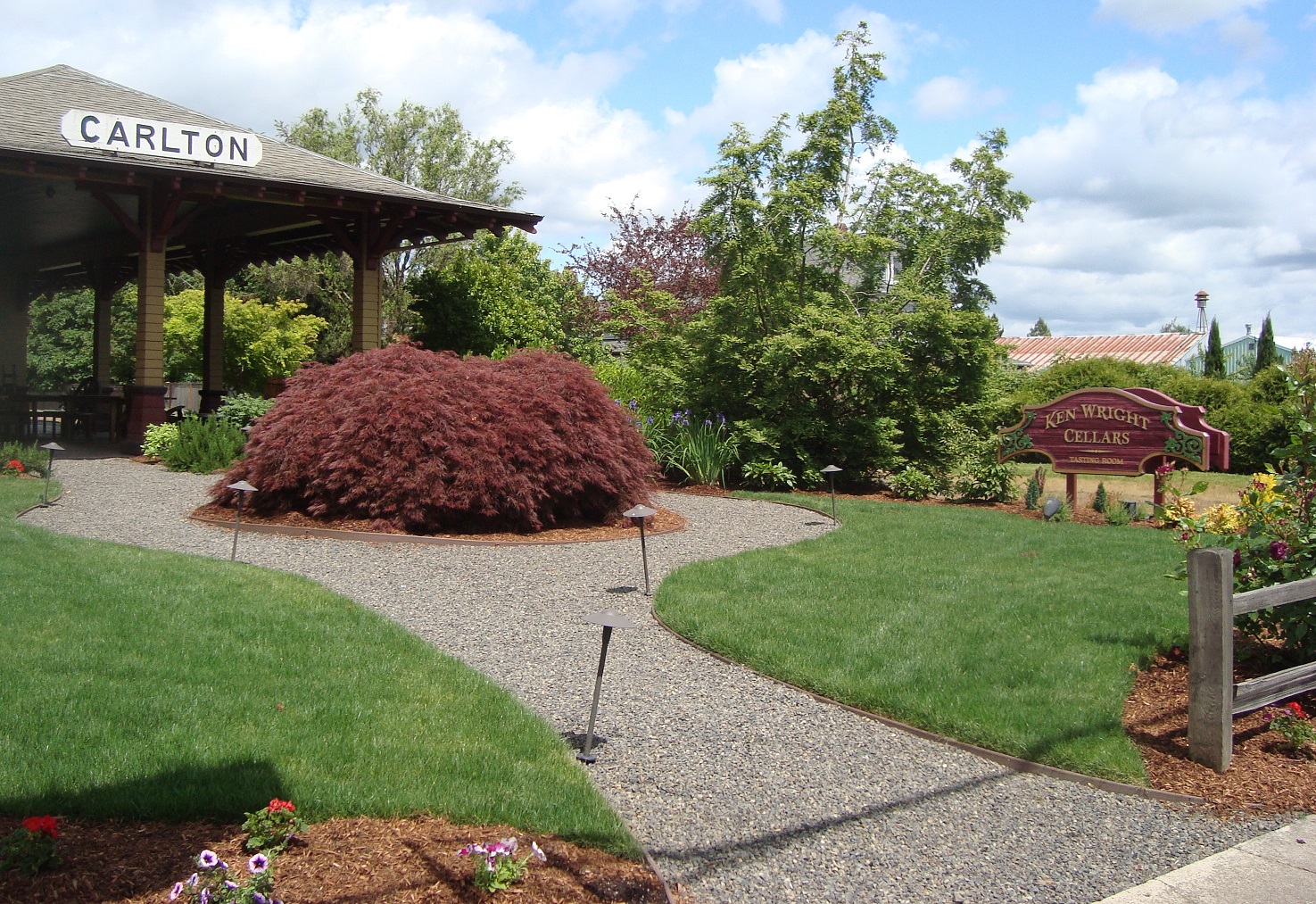
A barrel tasting is literally that, tasting wines out of the barrel before they get bottled or blended and bottled. At Ken Wright Cellars we were in for an additional treat. The people manning the barrel tasting were the actual grape farming crew. They were fabulous to talk with about how the wine made it to the barrels and the land on which the grapes grew. We tasted pinot noir barrels from the Canary Hill, Carter, and Savoya vineyards. They were all 2012 barrels. The Canary Hill had good light structure and a young woody nose; the Carter was more fruit forward, but still an earthy nose that we thought would age really well. The Savoya was the earthiest of all, yet lighter than the others I thought. We also tasted 3 bottled wines, the 2011 Pinot Blanc (shortbread on the finish! yum!), the 2010 Chardonnay (earthy and not very sweet, which is a good thing), and a 2007 McCrone Vineyard Pinot Noir (floral on the nose and a spicy finish, still could use some aging). The Ken Wright Cellars tasting room is located in the small town of Carlton. Right on the main drag you'll find the Cellars and close by is the fabulous Carlton Bakery. Their breads, baked goods and sandwiches were phenomenal.


The second barrel tasting occurred by luck at Willamette Valley Vineyards. We were on a private tour when the assistant winemaker happened by and offered to give us a barrel tasting. What an amazing opportunity! Having a winemaker tour was so enlightening. He showed us how they rated barrels with a glimpse into how decisions are made on which barrels to blend together. We tasted a Chardonnay with a coconut overtone and three Pinot Noir barrels that were all very different. We were also lucky enough to get a taste of their port (made from Pinot Noir grapes, fortified with a brandy made from their Chardonnay grapes) that hides in a back, locked alcove. The port was something that his father had started when he was head winemaker as a private project that turned out to be amazing. They now sell it at the winery and we had to bring home a bottle.
For all of you who live in wine country, this may be old hat to you, but for the rest of us, what a treat. If you have the opportunity to do a barrel tasting, definitely do so. It's as much an education as a pleasure.

Sunday, June 2, 2013
Oregon Wine Tasting - Elk Cove Vineyards
I am so excited to share with you our second exploration of Oregon wine country. We tasted 45 wines in two days. That's certainly not a professional-level tasting rate, but I'd say not bad for vacationing. With the help of our local wine shop (if you follow my blog, you know that's Midtown Wine & Spirits) and wine distributor we started our journey off with a tasting appointment at Elk Cove Vineyards. We drove through some lush green winding hills and valleys and then up to a beautiful vineyard vista on a chilly, but sunny morning. The rhododendrons were at their peak bloom all across the Willamette Valley. The wealth of color they provide in their mostly shaded spots is extraordinary. Spring is one of the best times to be in the Pacific Northwest.

Elk Cove is one of Oregon's oldest wineries in the relatively young Oregon viticulture area. Begun in 1977 by the Campbell family it remains a family-run winery business and the care with which they make their wines shows. They have about 250 acres in production on four different locations and bottle about 35,000 cases a year. What a great way to start our winery junket. We tried the 2012 Pinot Blanc, a steely wine with hints of butter and lemon. Next was a 2012 Pinot Gris - their 2006 and 2009 were Wine Spectator top 100 wines. The 2012 was delicious, florally, crisp and refreshing with a pineapple nose. We tasted 2 Rieslings - the 2010 Riesling Estate and 2011 Late Harvest Riesling, both were challenging on their own to our untrained palettes, but would be lovely with the right food. We were surprised to find so many Rieslings on our tour in Oregon. We haven't begun to explore or fully appreciate the grape yet, but we're going to find our way there!
The 2012 Pinot Noir Rose we tasted next was wonderful - lots of rose and candy notes. Full of strawberry, red grapefruit and watermelon through the middle and finish. This is a small production line for them so knew we wouldn't be getting any at our local wine shop - definitely something to bring home. We followed the white and pink wines with 3 Pinot Noirs, the Willamette Valley, Five Mountain, and La Boheme. All were very nicely fruity and earthy. Our favorite was the La Boheme, which had a dark fruit nose and velvety mouth feel. We followed these up with a Del Rio Syrah, which had good spiciness, structure and tannic finish. The last we tasted the 2010 Ultima dessert wine. I've been finding myself fascinated by dessert wines and ports of late because they are so fun to pair with food. We brought an Ultima home and I'm excited to make something to complement its peachy flavors. All-in-all, a winery to keep an eye out for at your local wine shop or visit when you are in the Willamette Valley.
Next up....Ken Wright Cellars. Coming soon!
Thursday, May 9, 2013
Tuesday, February 26, 2013
Portalicious

Port Tasting and Birthday Celebrations!
Up until our tasting last month, I hadn't a clue what port was really all about. I had used it in cooking a fair bit - two of my favorite recipes are a marinade for rack of lamb and a pear and port fruitcake - and had enjoyed a glass at the end of a meal once or twice a year. However, I had never really known the difference between a basic ruby and tawny, let alone the aged and vintages of both. My, what an eye-opener tasting event! Ruby and tawny are so very different - tawny being the amber adult cousin of the youthful, sweet, Ruby. Both are loveable, but you'll probably prefer one over the other.
In the picture above, you'll notice we tried basic versions of both as well as a 1994 vintage porto and a 10-year aged tawny. The latter two were sophisticated versions of their younger siblings. They were softer, richer in depth, and nuanced.
The main difference between ruby and tawny derives from the aging method. Ruby spends two to three years in stainless steel or wood before it is bottled, but tawny ages only in the cask and is at least three years old. Indicated aged tawnies, such as our 10-year old above, are made from a blend of vintages with the average age being 10 years old - hence the label, same goes for the 20-year, 30-year and older tawny vintages - labeled age indicating the average vintage of the wine. You might also see Colheita, which we did not taste, but this is aged tawny from a single vintage. They range from 7 to 50 years aged in the cask. I wouldn't be averse to tasting of a Colheita one of these days.
The single vintage ruby, such as our 1994 Dow's, is the rarest and most expensive form of porto. The wine vintages must be declared by the company and approved by the authoritative body - the IVP (i.e., the Port Wine Institute - Instituto do Vinho do Porto). Unlike the tawnies that age in a cask, declared vintage rubies must be bottled between July 1 of the second year and June 30 of the third year after harvest. There are several other types of porto, but we hit a couple of highlights in our tasting.
Our tasting of these fine ports followed a fun birthday feast with fabulous friends. Tasting with friends is a rich experience with ample rewards of good conversation and much laughter - I highly recommend it. Eric Asimov agrees with me - I just finished his book "How to Love Wine: A Memoir and Manifesto" in which he finds enjoying wine with friends is possibly the best way to taste wine. I usually read his column in the New York Times so my husband gave me the book as a Christmas present (thanks, incredible husband of mine). The book is a fun read and makes me feel better about our approach to wine, albeit Asimov wouldn't agree with the blind tasting we usually do. If you've ever felt inadequate about selecting or tasting wines, read his book - it will all make sense as to why you feel that way and how not to do so.
As a bonus at our tasting this time, one of our friends knew his port, which helped us all understand the beverage better than just reading about it in a book. He also kindly brought the upper-end bottles for us to experience! Many thanks, Chris!
Sunday, February 3, 2013
Winter Warming Menu

It was our turn to host dinner club again, but I forgot to take pictures :( So all I give you is a description. You'll have to let your mind fill in the colors and smells. Given the chill of winter - even snow falling the morning of our dinner - I went for warm, hearty comfort food. The first course was a hot Creamy Mushroom Soup with Mushroom Chips from an old Food & Wine magazine. The soup tastes velvety, almost cream-like even though there is no cream - it's all in the blending. A bonus is the mushroom chips on top - they are addictable (addictive and delectable). Earthy and crunchy. I recommend making a few extras for snacking! We served this with a Ferrari-Carano Fume Blanc, which also went into the soup.
The main course was a one-dish wonder - Smoked Sausage Cassoulet. This exemplifies the best of French bistro cooking. A hint of clove, rosemary and sage gives the dish a wintery feel and warms the insides. A Rhone-style wine pairs well with this. We finished off the meal with Chocolate Pound Cake with Raspberry Sorbet and Vanilla Ice Cream, paired with Pedroncelli Port from the Dry Creek area of Sonoma. The best part of the meal? The company. We love our dinner club friends!
Friday, December 28, 2012
Bubbles!

Just in the nick of time we bring you the results from our latest wine tasting of the year...bubbles! We upped the ante this time and splurged on a more expensive selection than our previous tastings. Instead of tasting different types of bubbles (e.g., Prosecco, Cava, Spumante, Sekt), we adhered to ones made in the traditional French champagne method (méthode champenoise)--specifically, non-vintage bruts. We tasted three from France and one from California. Again, a blind tasting, although now that I'm reading Eric Asimov's latest book How to Love Wine: A Memoir and Manifesto, we might have to switch that up (a great Christmas gift from my lovely husband). Asimov argues, quite convincingly, against blind tastings.
Nevertheless, we drank our bubbles blind. The first three listed below (and left to right in the picture above) are from France, the last in order is from Anderson Valley, California.
- Nicholas Feuillatte, Brut Reserve - $39.99
- Heidsieck & Co., Monopole, Premier Cru - $49.99
- Louis Roederer, Brut Premier - $49.99
- Roederer Estate, Brut - $22.99
What we missed in the event was a saber opening of the bottles. Just didn't have one handy - nor the skill to pull it off. I've seen it done - by a British Cavalry officer at a "beat the millennium ball" that friends put together in Baltimore to ring in 1999. Now that makes an impression!
So, go out, get your bubbles and saber ready (and a handsome British Cavalry officer, if handy) and enjoy the New Year's celebrations! Happy New Year to you and yours.
Sunday, November 18, 2012
Sonoma memories


From one stimulant to another...the wine tasting is outstanding in Sonoma - over 70 wineries to visit. Needless to say, we didn't quite get to them all. The sights also delighted. From salmon swimming up streams to beautiful gardens and a bronze wild pig statue. Next post....all the wines we tasted and falling in love with Pinot. Enjoy a few winery pics in the meantime!



Sunday, November 4, 2012
Tasting Event #3

Thanksgiving is just around the corner, so we tasted four wines that should go well with turkey and fixin's. With help from our friends at Midtown Wine & Spirits, we picked out four very different wines - two whites and two reds:
- A German Riesling: Von Schleinitz from Mosel - Weissenberg Kabinett @ $19.99
- A South African Chenin Blanc: Secateurs @ $16.99
- A California Pinot Noir: Belle Glos Meiomi @ $19.99
- A French Syrah-Grenache blend from the Languedoc region: H & B (Hecht & Bannier) Minervois @ $19.99
So, our results: the Reisling was a little too sweet for most people on its own. It was much better with the food, but some still thought it was too sweet. The Chenin Blanc was delicious on its own with a good minerality to it. It had the acidity to cope with the richness of the food, yet it didn't really stand up well against the food. That is, it didn't bring anything to the food and its own flavors disappeared. The Pinot Noir was the big hit, combining some nice up-front fruit with a bit of spice. It was delicious by itself but paired extremely well with the food, especially the brussel sprouts. If you wanted something a little heartier than a Pinot Noir, the Minervois was exceptional. The Syrah-Grenache blend and style is similar to that of more widely available Cotes-du-Rhones, should you have trouble finding an offering from Minervois in your wine shop.
Happy Thanksgiving!
Saturday, October 13, 2012
Tasting Event #2

Sadly, my write-up from our last tasting is way overdue. My apologies. Sincere thanks go to Bradley at Midtown & Spirits for helping us pick out a great selection of five pinot noirs. Our second tasting consisted of pinots from New Zealand, France (Burgundy region), the Willamette Valley in Oregon and another from Russian River Valley, California. The last was an inexpensive, mass market, pinot noir from California.
Here are the details on the five:
- Mark West, California (mass market wine) - $10.99
- Nobilo Icon, New Zealand - $14.99
- Argyle, Willamette Valley, Oregon - $22.99
- LWC, Loring Wine Company, Russian River Valley, California - $19.99
- Marsannay, Louis Latour, the Burgundy region in France - $22.99
As for taste profiles, as reconstructed from sketchy notes and fading memory, the Mark West had a spiciness to it that stood out from the others and, perhaps surprisingly for a wine at that price point, clearly improved with time. The Marsannay had a bit of the earthiness that one associates with Burgundy, LWC had a floral nose and hints of strawberry, the Nobilo was black cherry, and the Argyle was silky smooth with hints of violet.
Next up...Turkey wines. What goes best with a Thanksgiving meal? Paired, of course, with a little turkey and other thanksgiving edibles.
Sunday, September 23, 2012
Baked Figs and Bread

Just about ready for the oven. Old fashioned health nut bread (http://acooksmusings.blogspot.com/2011/04/bread-old-fashioned-way.html) and baked figs with Madeira and thyme (and a little brown sugar).
Tuesday, September 4, 2012
Julie Child's Influence?
Reading articles about Julia Child's recent 100th birthday by Jacques Pépin, Julia Moskin and others made me reminisce about why I became interested in cooking. I barely knew who Julia Child was when I was young. Sure, I had heard of her, but had never seen her show nor did we have her cookbooks. Maybe my mother was influenced by her. This was the 70s when family meals were becoming something to be cherished as more and more mothers entered and stayed in the workplace. My mother was one of those. She was a teacher, always working, always devoted to her students. There was rarely a night during the school year when she wasn't grading papers or working on lesson plans. In addition, she sewed our clothes, gardened, taught piano lessons, hauled us to our own lessons - ballet, symphony, cello, violin, and flute. How she ever did all of that and put not only food on the table, but also good food is still an amazing feat to me.
She was and is an adventurous and good cook. She has never seen a recipe she couldn't adapt to what she had on hand. My husband complains that I picked up this habit of not following recipes from her - I frequently disagree with recipes - either the ingredient list or more often their preparation instructions. My husband, being a scientist, thinks recipes are written to be followed exactly and when I first met him, he followed the instructions on the boxed mac & cheese box literally - it said 6 cups of water, he used 6 cups of water. He said they wouldn't have written instructions if they weren't meant to be followed. Sigh, the scientist versus the adventurous cook. While science has a great deal to do with cooking, I didn't think boxed mac & cheese was one of those areas that needed strict rules. However, the most frequent reason I change recipes is that there are certain methods I was taught at the Cordon Bleu that I completely abide by as tried and true methods. While I've never scientifically tested if they make a difference, I will change a recipe's methods to adhere to my training. Sheesh, what a stick in the mud I can be and so hypocritical of my husband wanting to following the mac & cheese box recipe!
I think I get my love of reading recipes and cookbooks from my mother as well. For years I kept all the little free cookbooks a young child could get from mail away coupons, tear-away sections from magazines, or pick up at the grocery store. We didn't buy a lot of real cookbooks when I was young. You just didn't do that. We had Betty Crocker, a smattering of others, and we subscribed to Sunset Magazine - this was all that one really needed and certainly all it took to plant a seed for me.
Another great part about growing up in my family were the cherished visits to the Pike Place Market in downtown Seattle. While we lived a little less than an hour outside of Seattle, my grandparents lived in the city and once in a while when we went to visit them my mother and grandmother would take me and my sister to Pike Place. Back then it was a bit grungy and hippy in a seedy part of town, but to a young kid the wonderful labyrinth of shops and stalls was a fascinating and awe-inspiring view into unknown worlds. I remember a shop on the second floor - or was it the third? I always got lost. It was just down the stairs from the fish stalls that now have hundreds of tourists flocking to see the fish fly. It was an Italian market with dried fruits I had never seen before, pastas in shapes that seemed to mean something (no, not like the crude shapes made into space needles, penises, or what have you today). These were pastas that were meant for particular sauces and that was intriguing. There were also dried beans galore - shapes and colors that someone knew how to cook. I wanted to know how to cook these beans and wanted to know why one pasta was destined for one sauce and another for something else. I loved Pike Place. I still go back when I can on visits to Seattle, but it's changed now that markets are ultra-trendy. I'm grateful that it has survived and still love it, but it's lost a little of its marvel. The hippy, weird shops are mostly gone, replaced by high-end chic shops, but the essential food stalls are still there and some of the restaurant additions and alley shops just outside the market have added wonderful edibles to explore.
So, between family influence and unique opportunities that a time and place provided me, I came to love thinking about food and how to cook it. For whatever influence Julia Child had on that, I am grateful.
Sunday, August 19, 2012
Tasting Event #1

We are playing with the notion of hosting a monthly tasting event. Having science backgrounds we find ourselves highly entertained by comparison tastings - does a Caipirinha taste better with 51 Cachaça or Pitú Cachaça? Does a Manhattan taste better with 100% Rye or a blend of Rye and Bourbon? How do single malt Scotch Whiskys taste different by Scottish distillery and region? Why stop with liquor, how about cheeses or chocolates? And, better yet, why not share the fun with others? Yes, we have sciency friends, too, although that's not a prerequisite.
The warm weather of summer made us lean toward white wines as a first foray - crisp and cool would be welcome during this brutally hot summer. However, on second thought, we decided on Rosé wines. These delightful wines, best served between 10-12°C, provide an equally refreshing respite from the heat, and at our local wine shop we have noticed a growing selection each time we return. I was delighted to explore something that had been scorned in the US for many years (likely due to its association with White Zin), but now appears to have surged in popularity.
The difficult part in this entire plan was narrowing down which ones to taste. We ended up with nine guests for our first event and, while there is no rule in my book on how many wines one should taste at a tasting, we decided on four wines for this first foray. Once we knew how many we would taste, we then had to decide how to pick. Do we pick across countries (Chile, France, Spain, Italy, etc.) or, perhaps, within a country but across its regional variations? Because many different regions of France were represented among the offerings at our favorite local shop (Midtown Wine & Spirits), we decided to stay within France. We ended up with wines from the Loire Valley, the Rhone Valley, Provence, and the Savoie region (near the Alps). They were all 2011 vintages and cost between $14 and $20. Here were the wines we served:
- Rosé Gamay from Les Rocailles (Appellation Vin De Savoie, near the Alps) at $15.99
- Rosé d'Anjou from Monmaousseau (Appellation Rosé d'Anjou, in the Loire valley) at $13.99
- Commanderie de la Bargemone (Appellation Coteaux d'Aix en Provence) at $18.99
- Chateau de Tringuevedel (Appellation Tavel, in the Rhone Valley) at $19.99
Each guest was given four wine glasses (renting glassware is easy and fairly cheap), some 3x5 note cards, oyster crackers and water for palate cleansing. Nosh was self-serve at their leisure. We provided cured meats, pecorino and idiazabal cheeses, olive tapanade, tomato bruschetta topping, and tomato-based spicy curry topping, along with sliced baguette and crackers.
At 4pm we all convened and proceeded to taste, compare and contrast. While I determined that I would drink any of the wines, we all had our favorites. I was alone in casting my vote for favorite to the Tavel, a wine that one guest said wanted to be a red wine. I prefer reds to anything else, so I guess I'm not surprised at my choice. The majority rated the Provence Rosé as the one they'd most likely buy. Provence is known as the Rosé region in France so our friends confirmed its reputation. This wine had the perfect balance of bright fruit flavors with a dry finish. The wine from the Savoie region was a little too understated for most, while the Rosé d'Anjou was on the sweet side for several of us. All except the Savoie received a vote for favorite, so we didn't end up with any skunks thanks to the help from our wine purveyor.
All in all I think we've hit upon a successful idea that we're excited to continue. For the next couple of weeks we get to ponder what will be next month's tasting! Comment with your ideas and we'll let you know what we decide and how it turns out.
Subscribe to:
Posts (Atom)